the secret garden
The secret garden is the heart of Frances Hodgson Burnett's novel, a place of death and rebirth, sorrow and joy, isolation and connection. Locked for ten years after the tragic death of Lilias Craven, it becomes a hidden world where three lonely children—Mary Lennox, Dickon Sowerby, and Colin Craven—find health, friendship, and a reason to live. Its transformation from a gray, seemingly dead tangle into a riot of spring flowers and singing birds mirrors the children's own journey from sickness and sourness to vitality and happiness, making it the novel's most potent symbol of the restorative power of nature, friendship, and what the children come to call "Magic."
History and Abandonment
The garden was Lilias Craven's cherished creation, a place she and her husband Archibald tended themselves, shutting out the gardeners. They spent hours reading and talking within its walls, and she had an old tree with a branch bent like a seat where she would sit, covered in roses. One day, the branch broke, she fell, and died the next day. In his grief, Archibald Craven locked the door, buried the key, and forbade anyone from entering. For ten years, the garden was left to itself, a monument to his sorrow. The only person who secretly entered was Ben Weatherstaff, who climbed over the wall once a year to prune the roses, keeping them alive out of loyalty to the young woman who had loved them.
Rediscovery and Restoration
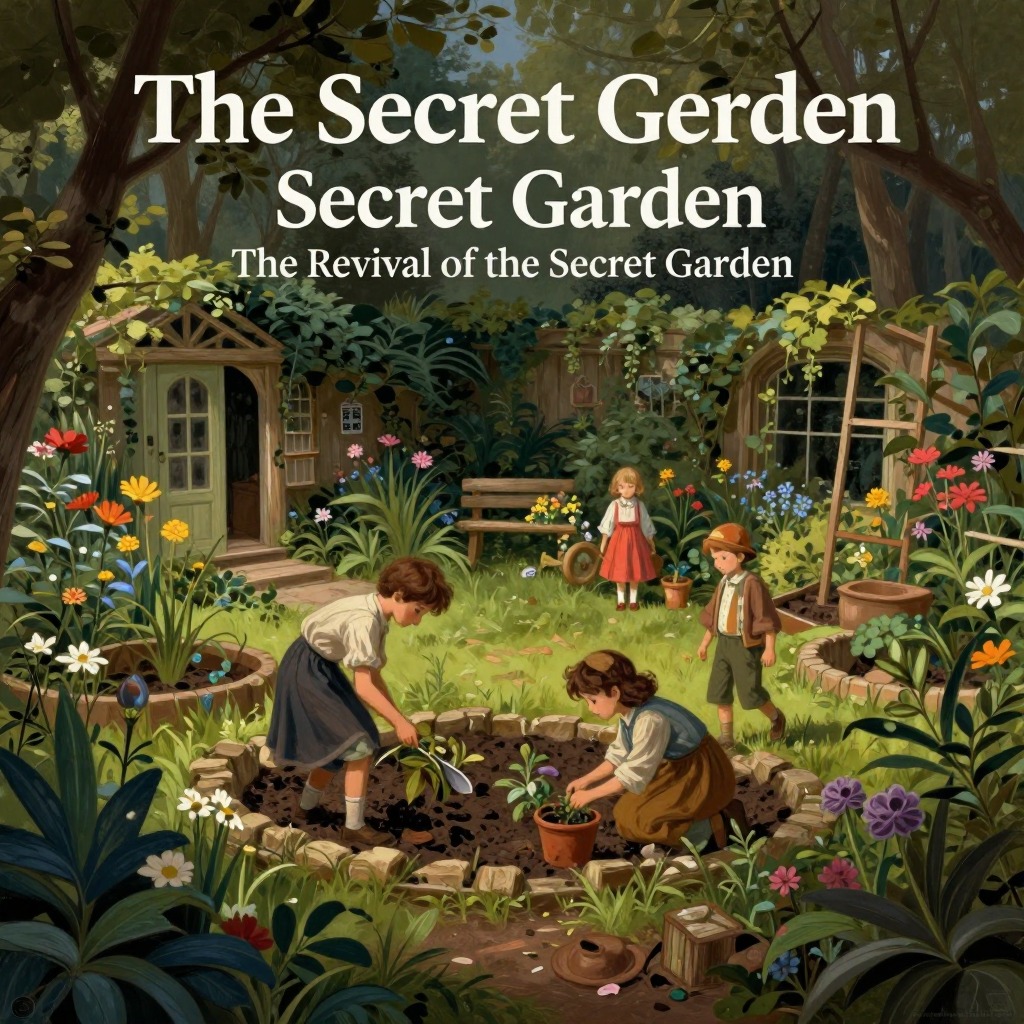
Mary Lennox, a sour, neglected child from India, first learns of the garden from Martha Sowerby, who tells her it has been locked since Mrs. Craven's death. Intrigued, Mary searches for it, and a friendly robin, Ben Weatherstaff's companion, shows her where the key has been buried for ten years. A gust of wind then reveals the door hidden under thick ivy. Mary enters and finds a place of haunting beauty: high walls covered with leafless rose stems, trees draped in climbing roses, and the ground covered with wintry grass. She begins to clear weeds and grass from around tiny green shoots pushing through the soil, and soon enlists Dickon's help. Dickon, a boy who can charm animals and understands the language of growing things, teaches her how to prune, dig, and plant. Together, they bring the garden back to life, planting seeds and watching as the spring transforms the gray tangle into a green and flowering paradise.
The Children's Sanctuary
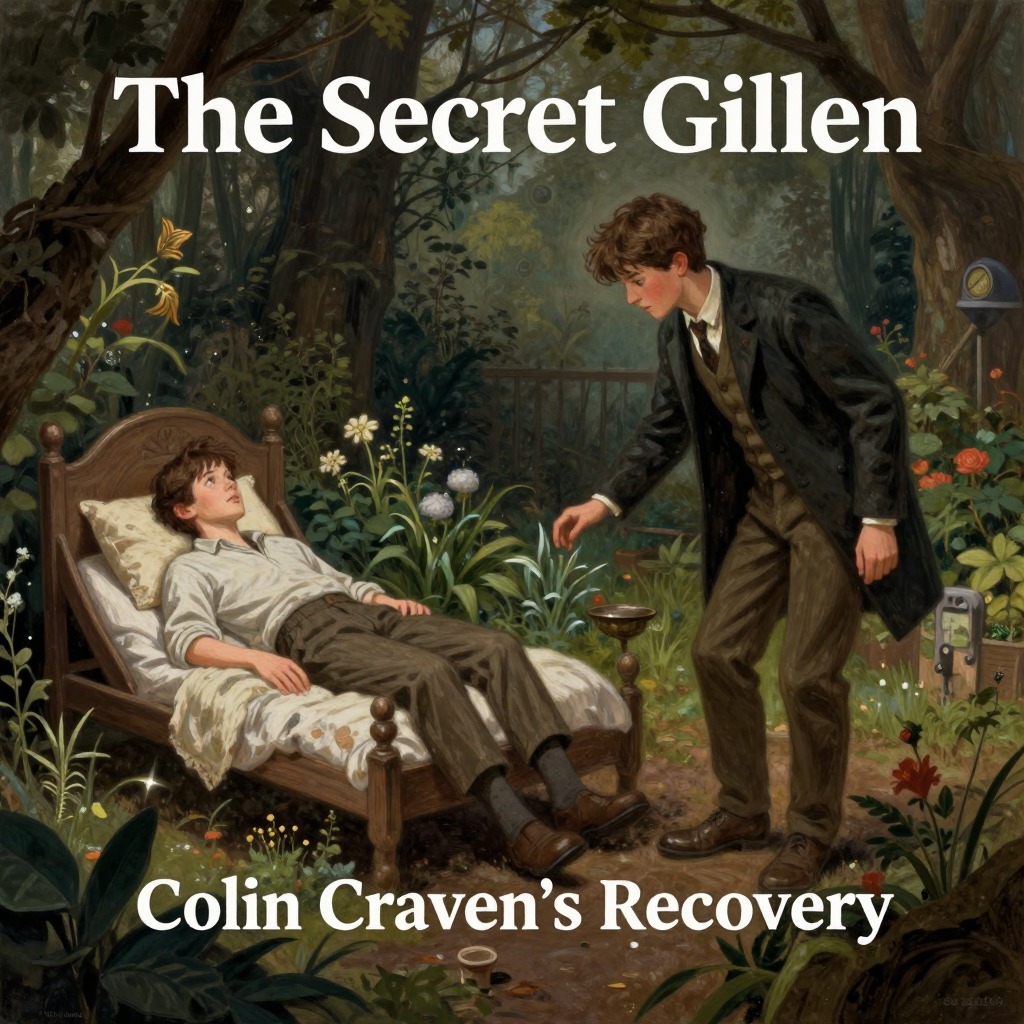
The garden becomes a secret sanctuary for the children. Mary brings Colin Craven, her cousin and a hysterical invalid who believes he is dying, into the secret. Colin, who has been hidden away in his room for years, is initially terrified of fresh air and the outdoors, but the idea of a secret garden captivates him. When he is finally wheeled into the garden, the sight of its beauty—the green veil of leaves, the golden sunshine, the singing birds—triggers a profound transformation. He declares, "I shall get well! I shall live forever and ever and ever!" The garden becomes the setting for their "Magic" ceremonies, where Colin chants affirmations of strength and health, and for their secret meals of fresh milk and buns provided by Susan Sowerby. It is here that Colin, goaded by Ben Weatherstaff's disbelief, stands up for the first time, proving he is not a cripple. The garden is their nest, their kingdom, and the place where they learn to laugh, run, and grow strong.
The Garden's Climax and Reunion
The garden's restorative power culminates in the reunion of Colin and his father. Archibald Craven, wandering in the Austrian Tyrol, has a dream in which his dead wife's voice calls to him from the garden, urging him to return. He obeys, and upon arriving at Misselthwaite Manor, he is drawn to the garden. As he approaches the hidden door, he hears the sounds of running feet and suppressed laughter. The door bursts open, and a tall, handsome, glowing boy—Colin—dashes into his arms. Colin leads his father into the garden, now a "wilderness of autumn gold and purple and violet blue and flaming scarlet," and tells him the whole story of the Magic, the secret, and his recovery. The garden, once a place of death and grief, becomes the site of a joyful reunion, proving that life and love can triumph over sorrow.
Symbolism and Significance
The secret garden is the novel's central symbol of transformation and renewal. Its initial state of gray, tangled death represents the emotional and physical stagnation of the characters: Mary's sourness, Colin's hypochondria, and Archibald Craven's grief. The act of restoring the garden—digging, weeding, planting, and watching things grow—parallels the children's own healing. The garden's "Magic" is the natural force of life itself, the power of spring, sunshine, and fresh air to restore health and happiness. It is a place of secrets and safety, a world apart from the gloomy, rule-bound Misselthwaite Manor, where the children can be free and wild. Ultimately, the garden is not just a physical location but a state of mind, a testament to the idea that with care, attention, and love, even the most desolate places—and people—can come alive.